
In the Sicilian hinterland, there’s a small village of 1,500 inhabitants, populated by artists from around the world who, in exchange for hospitality, have enriched and colored it over the years with over 40 murals. The project was initiated by an Italian-Swiss couple.
This content was published on July 27, 2025, at 9:30 AM
5 minutesDario Lo Scalzo
In the heart of the Alcantara Valley, on the slopes of the Nebrodi Mountains, lies Graniti, a small village in the province of Messina. For just over a decade, it has been experiencing a resurgence and is now known as the “painted village,” an open-air museum featuring murals and drawings by artists from around the world.
It all began in 2014 from the passion and vision of Graniti-Swiss entrepreneur Salvatore Romano and his wife, Karin Maier, who, with great intuition, set themselves the goal of repopulating Graniti by creating culture, building an international community, and, indirectly, encouraging the emergence of a new tourist circuit on the island.
Originally from Graniti, Salvatore Romano moved to Switzerland with his mother as a baby to join his father. He attended school, continued his studies, and worked in Switzerland as an entrepreneur for much of his life.
With both feet in Switzerland and his gaze fixed on his Sicilian roots, encouraged by his wife, a decade ago he decided to spend time and energy in his native village, thus giving life to “ Graniti Murales ”, a visionary initiative that has left a significant mark on the area and which is the result of Romano’s desire to create value and rebirth.
Artists from all over the world
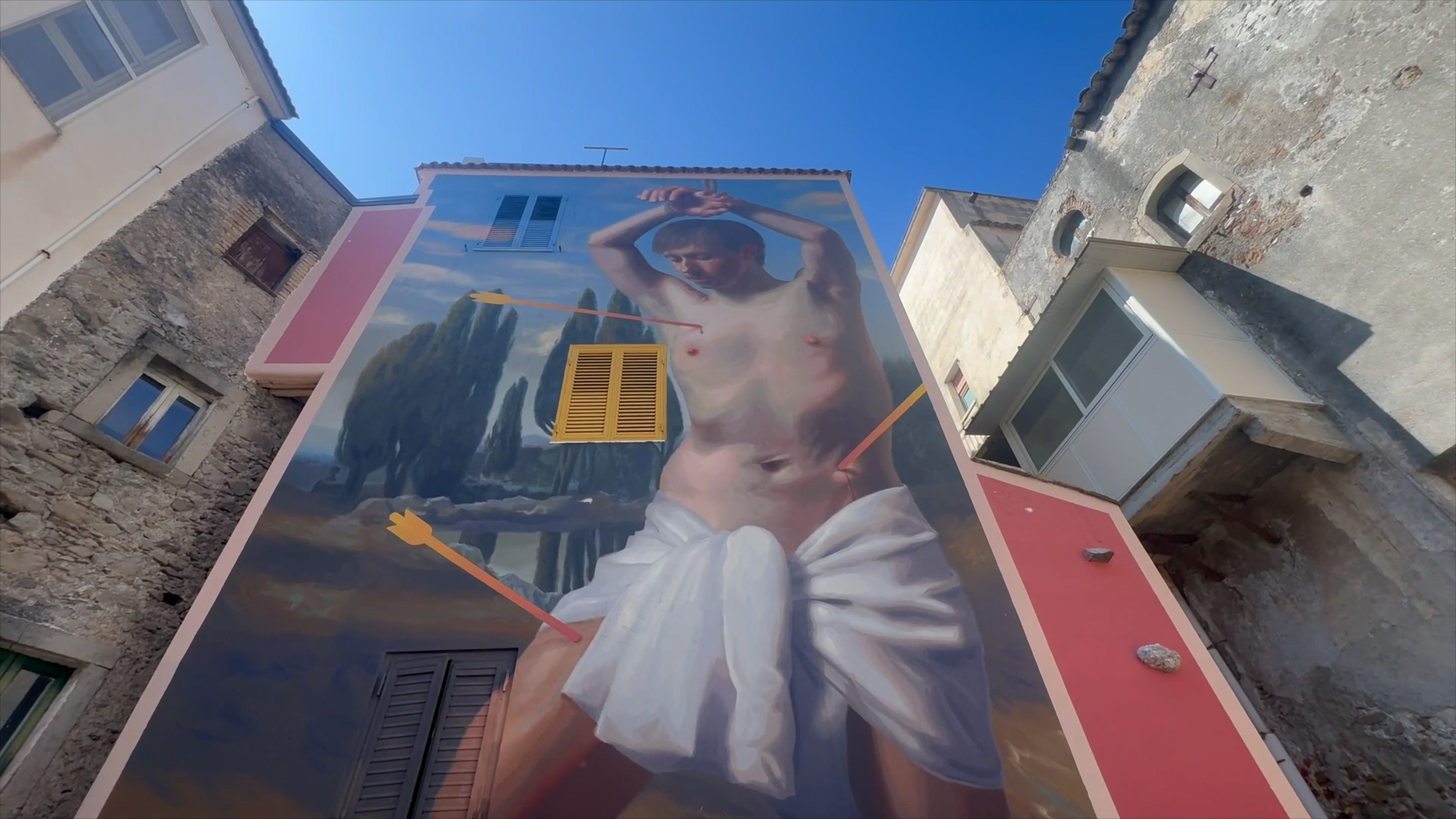
The Art Project Graniti & Graniti Murales consolidated and gave greater vigour to Romano’s initiative. In 2017, with the patronage of the municipality and under the artistic direction of Hawaiian artist Richard Ralya, the town was transformed into a little jewel by redeveloping and enhancing it.
Thus, Romano fulfilled his dream of connecting his two homelands: the Swiss one, always in his heart, and the Italian one, stitched together in his heart through art. Two countries are metaphorically united by the cultural and artistic bridge born of his vision. The village thus became a truly dynamic canvas, intriguing and stimulating the residents of Graniti, who were initially sceptical of the idea of “Swiss,” but then gradually opened up to the world, to the welcoming people, art, and beauty.
Over the years, Graniti Murales began to attract international artists thanks to Ralya’s remarkable work, and as a result, curious visitors and tourists arrived, as well as other Europeans (Swiss and otherwise) who began to populate the village.
Socio-artistic “barter”
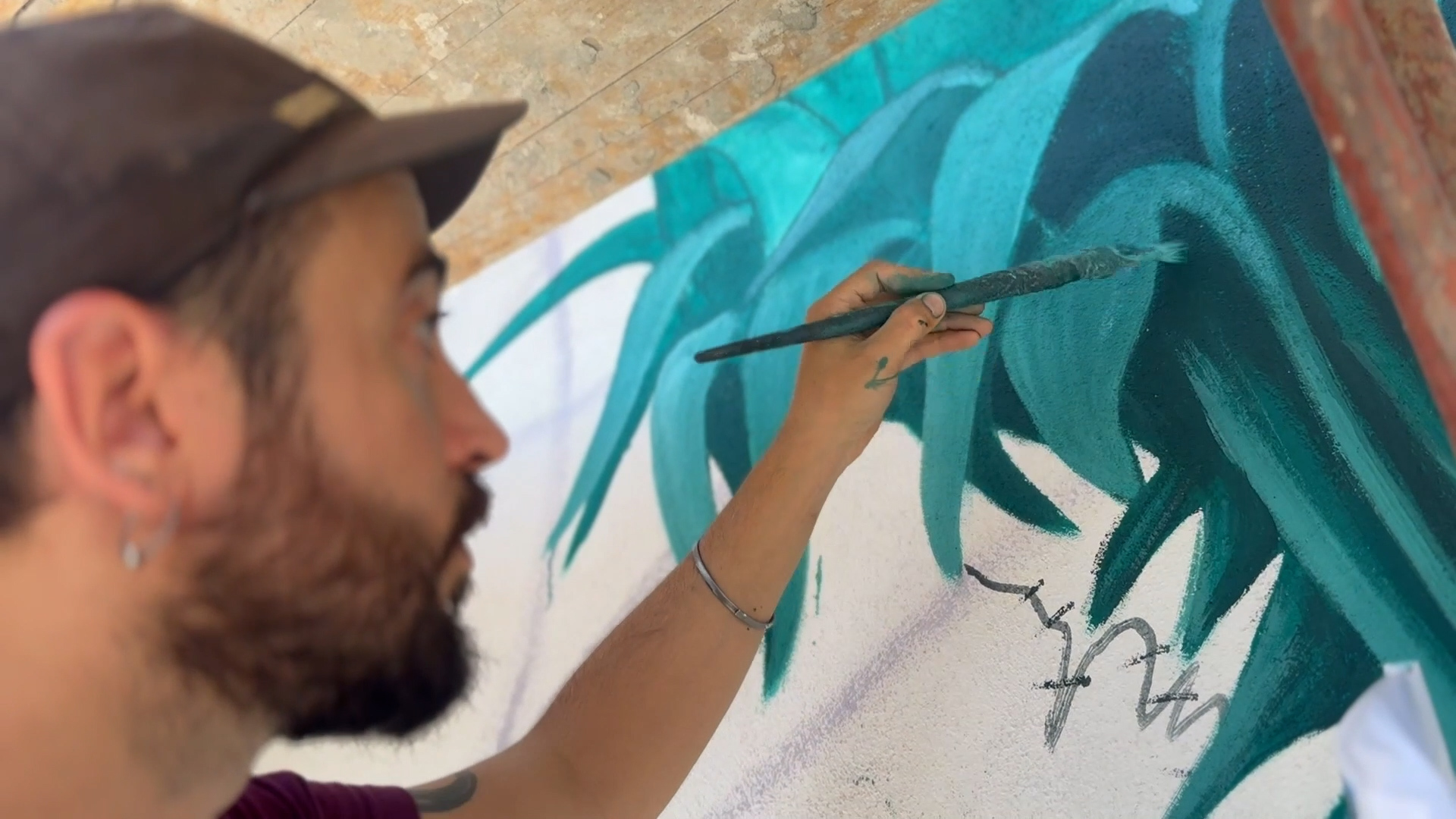
The Los Angeles of Sicily, as some define it, has now welcomed and continues to welcome numerous artistsExternal link, hosting and welcoming them in a formulaExternal linkwhich proves to be a winning combination; a sort of socio-artistic “barter” that offers free hospitality in exchange for works to be created in the town that have a thematic connection to the area but also resonate within the artist’s soul.
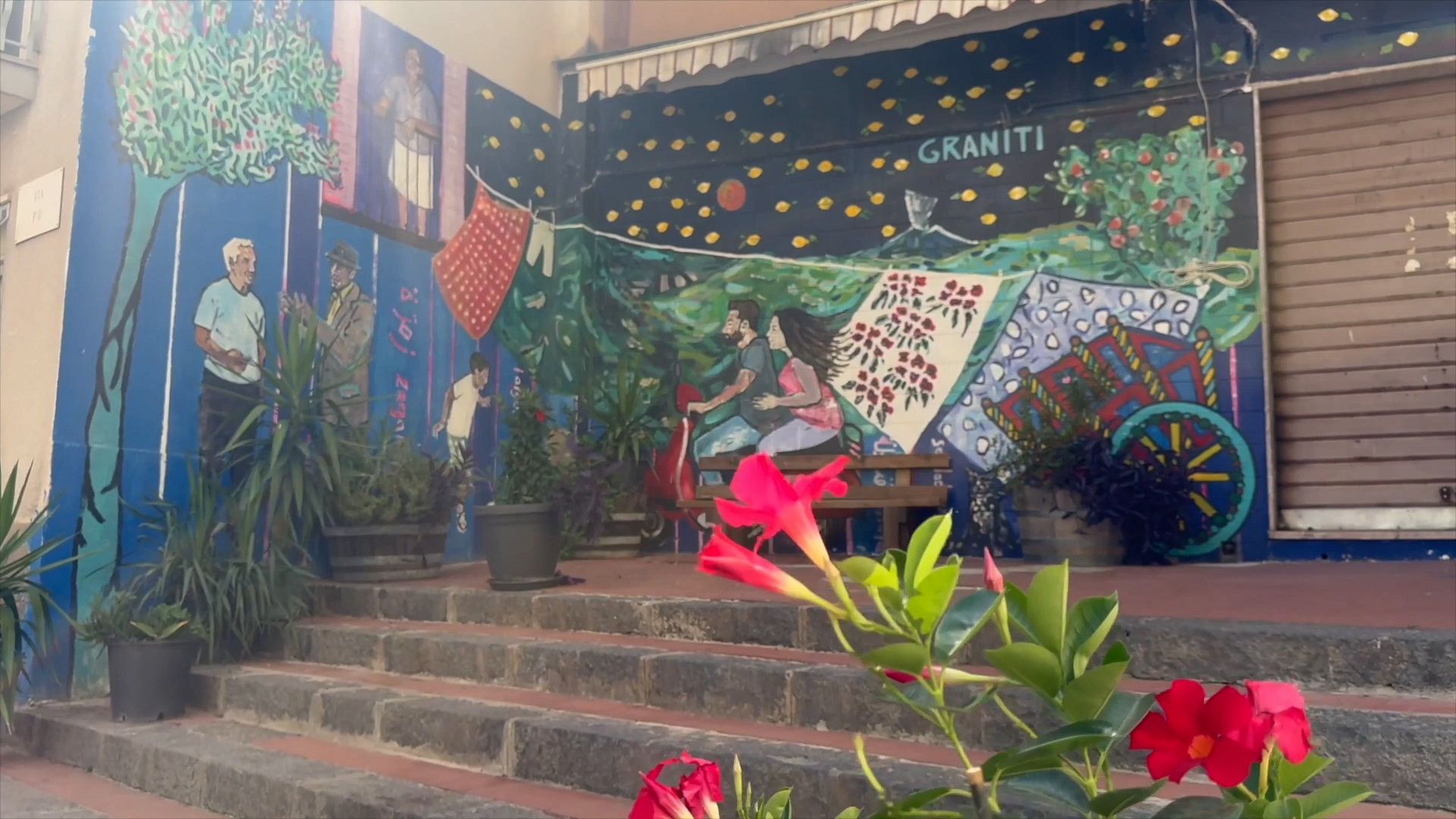
The murals represent various themes: from migration to human mobility, from climate change to gender emancipation and the condition of women, from the representation of characters and situations to works of memory, such as the one that narrates the story of Maria Grazia Cutuli. External link: Sicilian journalist barbarically murdered in Afghanistan.
The appreciation for Graniti Murales is evident, even from afar, for those who haven’t yet had the fortune of physically visiting Graniti. This is evidenced by Google Maps statistics, which show the murals’ geolocation area.External linkGraniti’s murals have received approximately 500,000 views in the last year. By entering the keywords “Graniti – Murales” into Google Maps, you can geolocate the murals scattered around the country, view them online, and obtain information about the artists who created them.
Cultural tourism destination
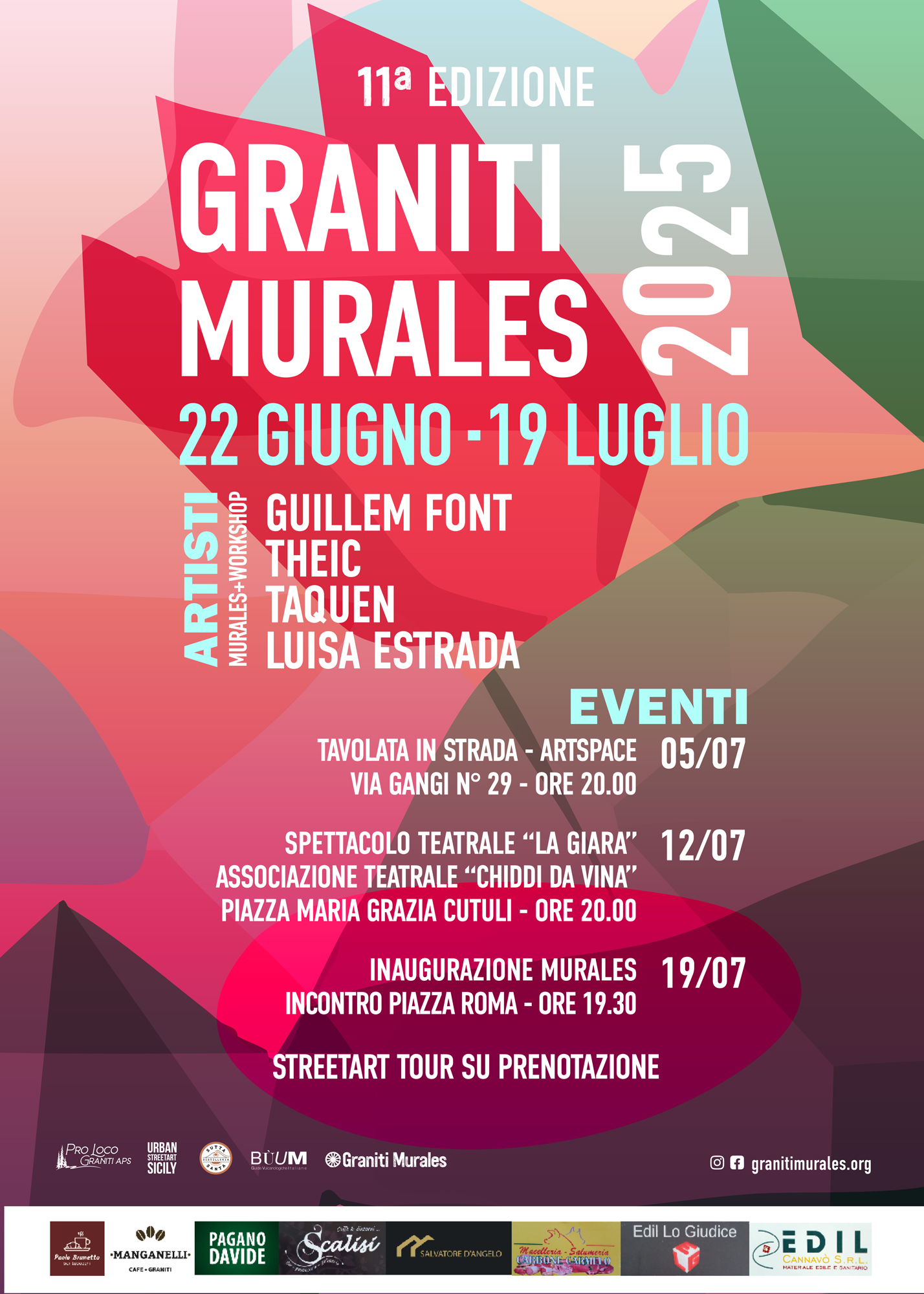
Graniti also hosts the annual street art festival “Graniti Murales,” which, in addition to urban art, also features other artistic events and performances. A unique opportunity for encounters and community building, it extends beyond the artistic context.
In just over ten years, the Grana Padana community has become a hub for cultural tourism and a Sicilian hub for street art.
Salvatore Romano and Karin Maier’s dreams of beauty are not yet fulfilled, and in the near future, with the support of the institutions, they intend to create a true museum, designed using green building techniques. This will attract other types of visitors to Graniti, and it can also serve as a creative space and entertainment centre for various types of events.
See full article here